
The state will continuously improve the solid waste identification standard system, strengthen guidance for solid waste identification agencies, and consolidate and expand the achievements of the comprehensive ban on the import of “foreign garbage.”
According to a report on the official WeChat account of the Ministry of Ecology and Environment (MEE), on August 27, Minister Huang Runqiu presided over an executive meeting of the ministry, where the General Rules for Solid Waste Identification Standards (hereinafter referred to as the General Rules) were reviewed and approved in principle.
The meeting emphasized that the General Rules are an important foundation for advancing the precise, scientific, and lawful governance of solid waste. Efforts will be made to intensify publicity, training, and guidance for solid waste identification agencies to ensure the effective implementation of all provisions. A feedback mechanism for standard implementation will be established, and research on solid waste identification technologies will be strengthened to continuously improve the identification standard system, providing robust support for solid waste environmental management.
In 2017, the former Ministry of Environmental Protection formulated and issued the General Rules for Solid Waste Identification Standards. To further enhance solid waste management and improve the basis for identifying solid waste attributes, the MEE initiated the revision of the General Rules in 2021, tasking the Chinese Research Academy of Environmental Sciences, the Solid Waste and Chemicals Management Center of the MEE, and Tsinghua University with the revision.
In January 2024, the MEE publicly solicited opinions on the national ecological and environmental standard General Rules for Solid Waste Identification Standards (Draft for Comments). According to the drafting instructions of the draft, China faces high intensity of solid waste generation but lacks sufficient disposal capacity, with correspondingly high costs. As domestic crackdowns on violations involving solid waste, especially hazardous waste, have intensified, some enterprises have begun exploiting ambiguous clauses in existing standards to “disguise” solid waste and evade supervision.
The drafting instructions noted that in recent years, illegal transfers and dumping of solid waste have shown a rising trend, often due to unclear identification of solid waste attributes, leading to incidents where solid waste is transferred under the guise of raw materials or products. Meanwhile, domestic associations and enterprises, lacking a clear understanding of the essence and basic principles of solid waste management, have initiated various group and enterprise standards for solid waste or unregulated by-products, causing confusion in the attribution of by-products.
Solid waste identification in China primarily focuses on the management of imported goods at ports. The drafting instructions explained that in 2017, the former Ministry of Environmental Protection, the General Administration of Customs, and the General Administration of Quality Supervision, Inspection, and Quarantine released a list of recommended solid waste attribute identification agencies, expanding the number from 3 to 20. From 2019 to 2021, the number of solid waste attribute identification cases for imported goods was 5,967, 6,506, and 7,627, respectively, showing atrend. By August 2022, a total of 24,977 cases of solid waste attribute identification for imported goods had been conducted, with 4,875 cases identified as solid waste, accounting for 19.5%.
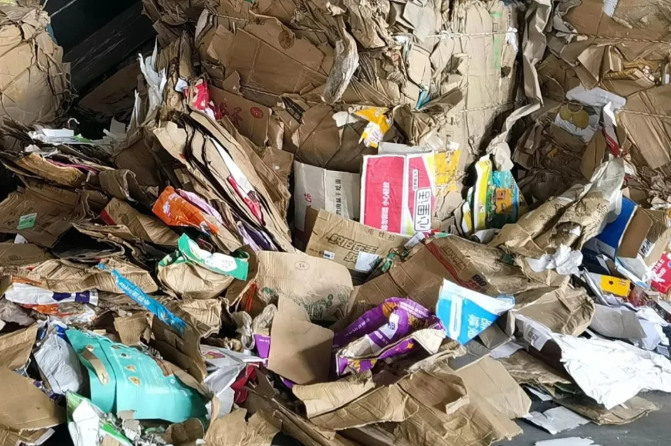
Since January 1, 2021, China has comprehensively banned the import of solid waste, including waste paper, which had been imported in large quantities for many years.
The drafting instructions highlighted that the current standards have ambiguous boundaries for distinguishing between second-hand products (used goods) and solid waste. On one hand, this creates a risk of solid waste being illegally imported under the guise of used goods; on the other hand, it can also impact normal testing, repair, and remanufacturing businesses. Given the needs of bonded testing, repair, and remanufacturing, there is an urgent need to supplement and improve China’s solid waste identification rules.
Taking recycled pulp as an example, industry insiders told China Business News that since the comprehensive ban on solid waste imports took effect on January 1, 2021, which included waste paper with historically large import volumes, some domestic paper manufacturers have bypassed conventional pulping processes by shredding waste paper raw materials and packaging them for import under the name of recycled pulp. Since 2021, there have been multiple cases nationwide where customs inspections identified suspected solid waste imports under the name of recycled pulp and subsequently returned the shipments.
“Behind this lies certain issues with the Recycled Pulp standard,” industry experts explained. On one hand, the standard is a recommended technical guideline and not mandatory, meaning the industry can choose to follow it or not. On the other hand, the standard is more applicable to the technical treatment of recycled pulp from domestic waste paper. For imported recycled pulp, it only specifies requirements for radioactive contamination, hazardous waste, heavy metals, and sensory properties, without imposing restrictions on biological, bacterial, or viral contaminants, which could potentially lead to public health incidents and biological hazards.
“There is a strong call within the industry to enhance the standards for imported dry-process recycled pulp,” industry insiders stated. The drafting instructions also emphasized that to prevent solid waste from evading management due to unclear attribute identification, it is urgent to address these regulatory loopholes through standard revisions.
According to China Business News, the General Rules retain the content related to identification based on waste sources from the current standards, leveraging their strong operability in the identification process, and improve relevant clauses for source identification. The revision focuses on clauses that have raised significant concerns during the implementation of the current standards, as reported by ecological and environmental authorities at all levels. By refining classifications, supplementing judgment rules, and clarifying relevant definitions, the General Rules ensure the scientific accuracy of solid waste identification results. While ensuring the prevention and control of environmental risks, the rules also promote the comprehensive utilization of solid waste and contribute to the synergistic effects of pollution reduction and carbon emission mitigation.
At a recent solid waste and chemicals environmental management work meeting for 2025 held by the MEE, Huang Runqiu stated that local ecological and environmental departments should consolidate and expand the achievements of the comprehensive ban on “foreign garbage” imports and continue to collaborate with relevant departments to advance related work.