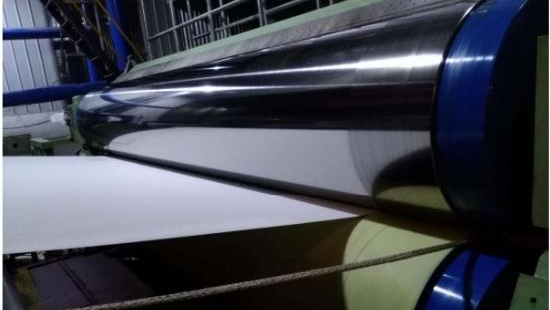
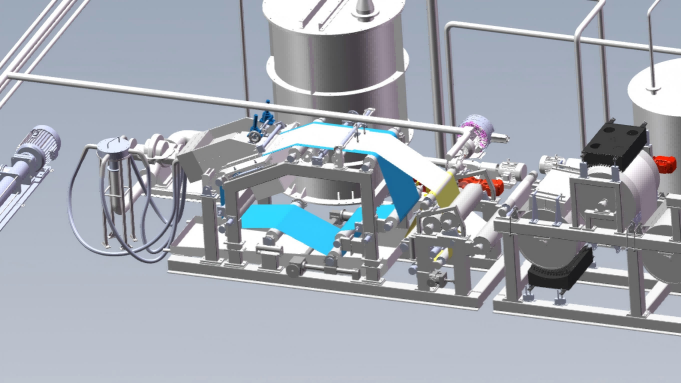
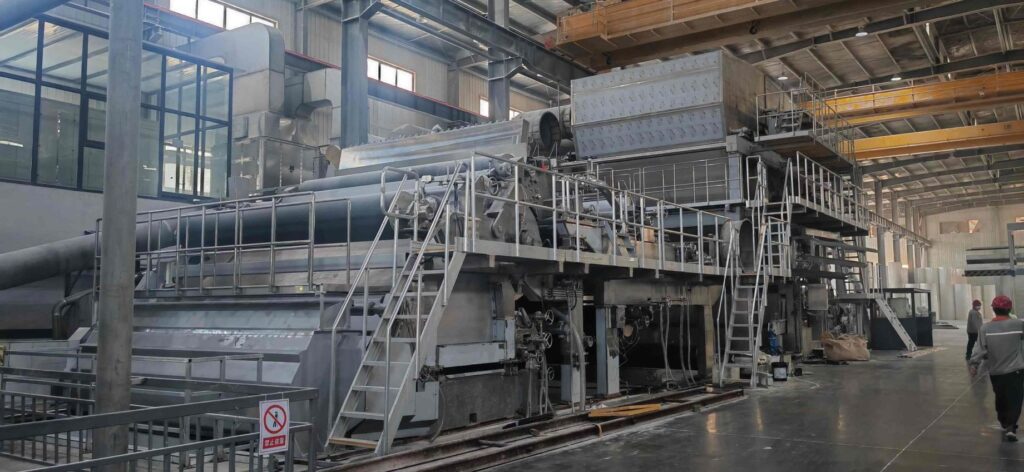
Bannor supplies crescent former tissue paper machines for producing toilet tissue base paper in jumbo rolls from prepared wood pulp or bamboo pulp. The machine combines forming, pressing, Yankee drying, creping and reeling, with the configuration selected around your paper grade, production target and mill conditions.
This toilet tissue paper machine produces parent rolls for downstream converting. Tell us your required output, finished paper properties and available utilities to start a project discussion. If you also need rewinding, embossing, perforating, cutting or packaging equipment, include those requirements so that the supply scope can be defined separately.
Paper Grades and Pulp Requirements
The primary application is creped toilet tissue base paper. The reference configuration uses wood pulp or bamboo pulp. Pulp quality, fiber blend and stock preparation affect sheet formation, strength, softness and machine operation.
For facial tissue or napkin base paper projects, send your target grammage and paper quality requirements so that suitability and configuration can be evaluated. Recycled or deinked furnish requires a separate review of stock preparation, cleanliness and finished paper specifications.
Please specify whether your mill will use purchased pulp or an existing prepared stock supply. Include the pulp type, intended blend and any available paper sample or quality specification.
Technical Specifications: 3600 mm Reference Configuration
These values describe one reference configuration for preliminary project discussions. Final operating conditions and production output are defined in the project technical specification.
| Parameter | Reference configuration |
|---|---|
| Product | Creped household tissue base paper |
| Raw material | Prepared wood pulp or bamboo pulp |
| Trim width | 3,600 mm |
| Basis weight | 11–15 g/m² |
| Design speed | 1,200 m/min |
| Reference operating speed | 1,000 m/min |
| Machine arrangement | Single-floor arrangement |
| Daily output | Defined for the agreed paper grade and operating conditions |
When comparing capacity, confirm trim width, finished paper basis weight, reel speed, moisture and effective operating time. Design speed alone does not establish daily saleable output. Yankee surface speed and reel speed must also be distinguished when specifying creping conditions.
For a different width, grammage or production target, provide your requirements for configuration review.
How the Tissue Paper Machine Works
Prepared stock enters the hydraulic headbox and is distributed into the gap between the forming wire and felt. The crescent former removes water as the sheet forms around the forming roll. The felt carries the wet web toward the press and Yankee dryer.
After pressing, the Yankee dryer and hood remove further moisture. Tissue creping takes place at the Yankee surface, where the creping doctor removes the sheet and develops its creped structure. The reel collects the finished base paper into parent rolls for subsequent converting.
The production sequence is:
Prepared stock → Headbox → Crescent forming → Pressing → Yankee and hood drying → Creping → Reeling
Main Machine Sections and Their Functions
Hydraulic Headbox and Crescent Former
The headbox distributor, turbulence generator and adjustable slice support controlled stock delivery and sheet formation. The forming section includes wire guiding, tension control and showers. Cantilever access facilitates wire replacement, while white-water collection and splash guards help manage water around the forming area.

Felt and Press Section
Felt guiding, tensioning, showers and vacuum conditioning support web transport and felt operation. Press loading and felt condition influence the dryness of the sheet entering the Yankee dryer and the drying duty that follows.
Vacuum equipment remains relevant to felt conditioning and other specified functions. Its scope should be checked in the complete machine configuration.
Yankee Dryer and Hood
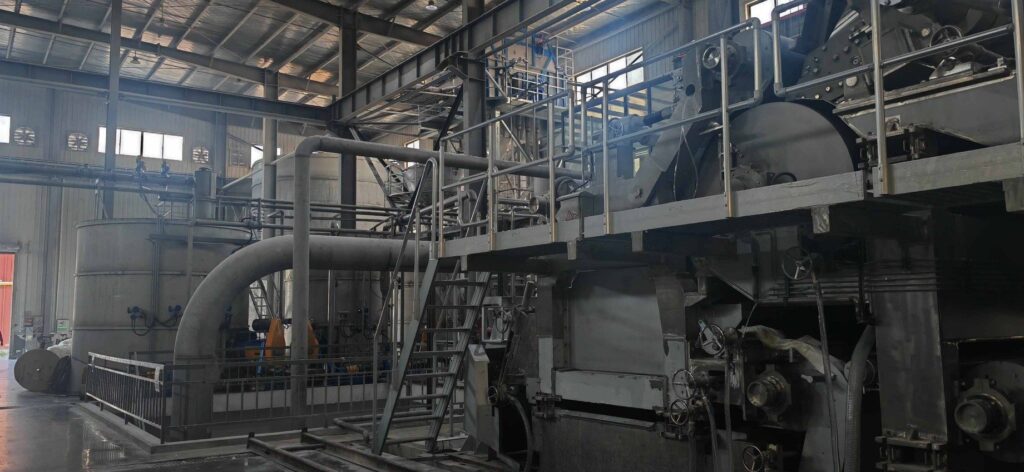
The Yankee dryer provides a heated surface for drying and creping. Its steam and condensate system is coordinated with the hood air system to suit the required evaporation load. Dryer size, steam conditions, hood heating and air circulation are selected as part of the drying configuration.
Creping Doctor Assembly
The assembly includes creping, cleaning and broke doctors. Blade condition, loading and angle adjustment influence creping performance. Final settings depend on the furnish, sheet moisture and required tissue properties.
Reel and Parent-Roll Handling
The reel winds the tissue base paper into parent rolls. Reel control, sheet-break detection and roll measurement support production monitoring. Confirm the required parent-roll width, diameter and handling arrangement together with the downstream converting requirements.
Drives, Automation and Service Systems
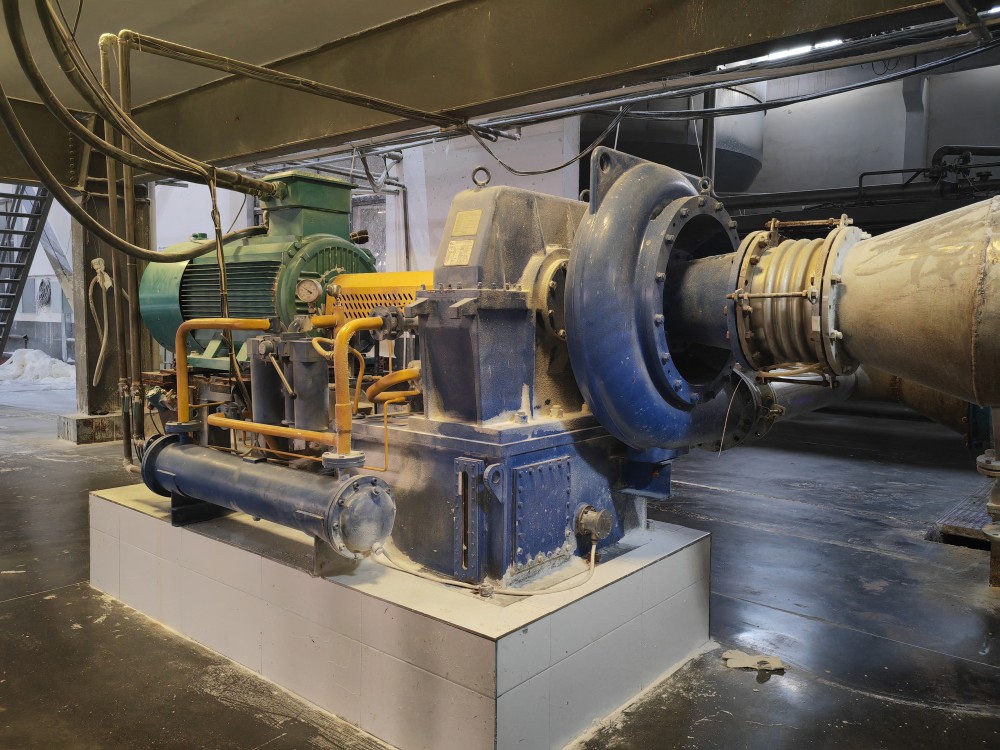
PLC-based machine control and variable-frequency drives coordinate operation. Wire and felt tension control, bearing monitoring, lubrication, hydraulic and pneumatic systems support the configured machine functions. Control brands, communication interfaces and automation scope are specified for each project.
Utilities and Installation Space
Steam consumption depends on the incoming web dryness, finished paper moisture, grammage, speed and the drying load shared by the Yankee and hood. Electrical consumption also depends on the equipment included in the supply scope, such as stock preparation, vacuum equipment and auxiliaries.
For utility planning, provide:
- Available steam pressure and flow at the machine supply point.
- Electrical supply voltage, frequency and available power.
- Process-water quality, supply conditions and circulation arrangements.
- Available compressed air and existing mill utility systems.
The project utility schedule should distinguish electrical consumption per tonne from installed power, and machine steam demand from boiler capacity. Consumption figures should always state their operating conditions and equipment boundary.
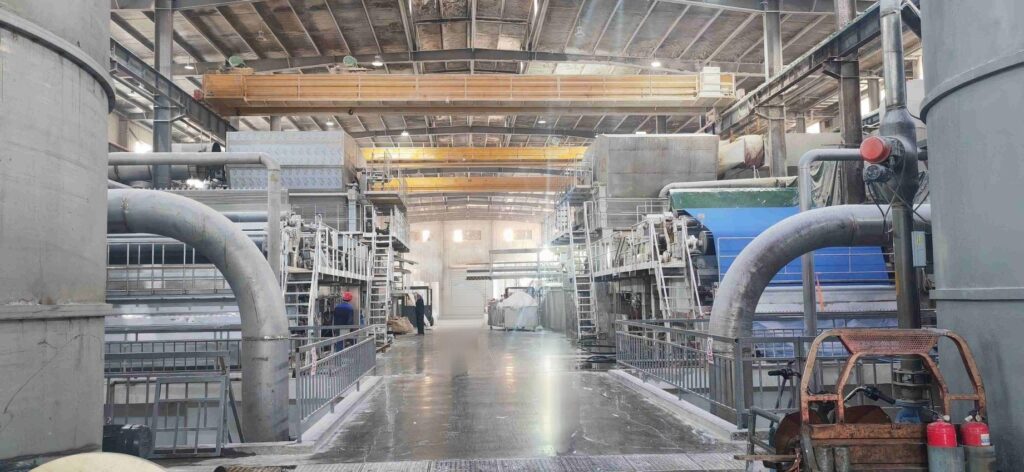
Factory planning should include the main machine, auxiliary equipment, maintenance access, lifting space and parent-roll handling. A general arrangement drawing is needed to establish the building and foundation requirements.
Define the Supply Scope for Your Project
For a new mill or an existing production facility, identify which systems are already available and which are required in the quotation. Review stock preparation, the tissue paper machine, drives and controls, vacuum equipment, steam and condensate connections, and roll handling as separate scope items.
Also specify your requirements for layout work, installation supervision, commissioning, operator training and spare parts. The quotation should identify included equipment and services, site responsibilities and the agreed performance conditions.
Projects involving through-air drying (TAD) need a separately specified drying configuration. Downstream tissue converting also requires its own equipment scope. Include either requirement in your inquiry where relevant.
Frequently Asked Questions
What does this toilet paper making machine produce?
It produces tissue base paper in parent rolls from prepared pulp. Consumer rolls and packs are made in the subsequent converting stage, using equipment selected for the finished product format.
Can the machine use bamboo pulp?
Bamboo pulp is a raw-material option for the reference configuration. Send the pulp specification, proposed blend and target tissue properties so that stock preparation and machine conditions can be reviewed together.
Can one machine produce different tissue grades?
The possible grade range depends on the furnish, grammage, drying capacity, creping settings and required paper properties. Provide separate specifications for toilet tissue, facial tissue or napkin base paper rather than assuming that every grade will have the same operating speed and daily output.
What affects the toilet paper making machine price?
The quotation depends on trim width, production target, paper grade, drying configuration, automation and auxiliary equipment. Stock preparation, utility systems and requested project services also affect the scope. For a useful price comparison, compare quotations against the same equipment list and operating conditions.
How much factory space and utility capacity are required?
These are established from the selected configuration and site layout. Provide an available building drawing and utility information. Allow for maintenance and lifting access, auxiliary systems and roll handling as well as the main machine.
Request a Tissue Paper Machine Quotation
Send the following information to Bannor to discuss a suitable configuration and quotation:
- Required paper grade and target daily output in t/d.
- Trim width in mm and finished paper basis weight in g/m².
- Pulp type, blend and available stock preparation equipment.
- Finished paper quality targets or a sample specification.
- Project country and whether this is a new installation or an existing mill project.
- Available building space, steam, electricity and process water.
- Required equipment scope, project services and any downstream converting needs.
If some parameters are still undecided, share the information available and identify the items that need evaluation.
Request Tissue Paper Machine Price
Please share your paper grade, target output (t/d), trim width (mm), basis weight (g/m²), pulp type and project location. If some values are undecided, tell us what you know.