
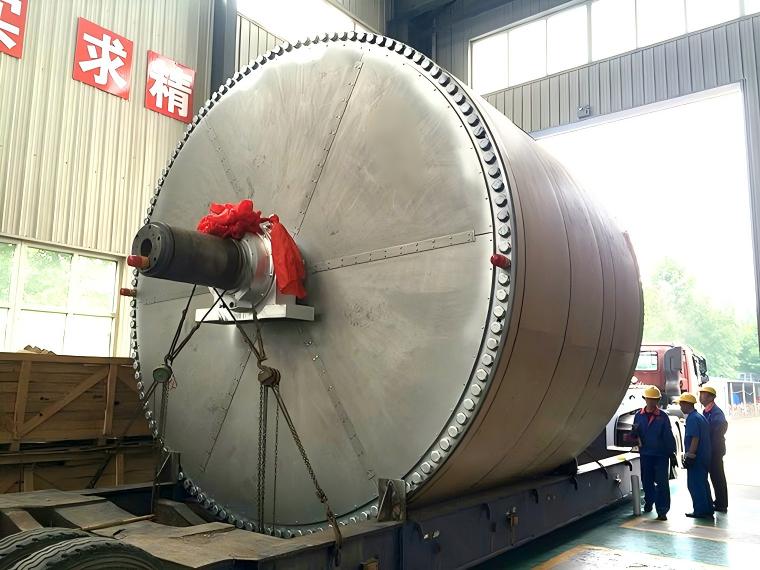
Manufacturing Process and Materials
Steel Yankee drying cylinders are manufactured using an electric furnace resin sand casting process.
Compared to the traditional cupola clay sand process, this offers higher precision and stability. Care must be taken to control temperature and process the sand mold during casting.
This applies to standard drying cylinders with a diameter not exceeding 4000 mm and a working pressure not exceeding 1.2 MPa.
Extra-large cylinders with diameters of 4000 mm to 4600 mm require technical review before implementation.
Working Principle
Steel Yankee drying cylinder is a core component of modern tissue paper machines. Its working principle is primarily based on a combination of steam heating drying and mechanical support transmission.
Steam Heating Dehydration: The Yankee cylinder is a large metal drying cylinder with high-pressure steam flowing inside.
The cylinder surface is heated by the steam. After pressing, the paper web has a dryness of approximately 40%-45%, and the remaining moisture needs to be removed through drying.
When the paper web comes into contact with the high-temperature surface of the Yankee cylinder, the moisture evaporates, achieving efficient dehydration and drying the paper web to the required level.
Paper Web Transport Support: The Yankee cylinder not only provides a heat source but also acts as a rotating roller, supporting the paper web during the drying process, similar to a belt.
The paper web wraps around the surface of the Yankee cylinder and rotates with the cylinder due to friction, completing the drying and transport process.
Auxiliary Drying and Pressing: The Yankee cylinder typically works in conjunction with a matching gas hood (heated by steam or gas) to complete the drying task, with the Yankee cylinder contributing 50%-60% of the total dewatering.
Furthermore, the Yankee cylinder can be used in conjunction with vacuum press rollers to provide a certain pressing effect, further improving paper strength.
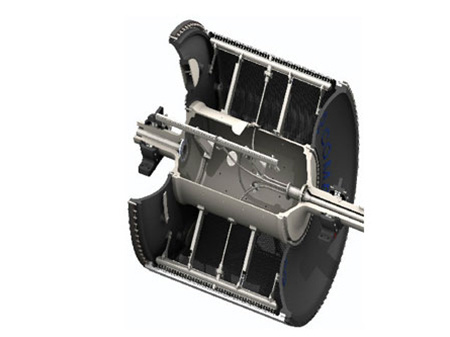
Steel Yankee Drying Cylinder Application Areas
Suitable for drying equipment in papermaking machinery, and extended to similar equipment in the food, printing and dyeing, and textile industries.
Primarily used in the production of disposable consumer paper such as sanitary paper and board paper.
Combined with pressure headboxes, vacuum filters, and other equipment, it can efficiently utilize waste paper raw materials.
For standard-sized drying cylinders with a diameter not exceeding 4000 mm and an operating pressure not exceeding 1.2 MPa,
extra-large cylinders with diameters of 4000 mm to 4600 mm require technical review before implementation.
In domestically produced crescent-shaped tissue paper machines, the combination of steel drying cylinders with advanced technologies such as air hoods and shoe presses has improved production efficiency and product quality.
Technical Challenges and Improvements
Early hot air hoods (such as TAD drying cylinders) suffered from uneven temperature distribution, leading to uneven paper drying;
modern designs address this by optimizing the lateral distribution control of hot air. Technical Improvements to This Issue
The technical upper limit is set at an outer diameter ≤ 8000 mm and a design pressure ≤ 1.2 MPa.
Dynamic balancing requirements: Imbalance ≤ 0.8 g·mm/kg at a speed ≤ 2500 rpm.
Industry collaboration will be promoted through technical exchange meetings to explore the future development direction of steel Yankee drying cylinders, covering manufacturing, quality management, and service optimization.
Steel Yankee Drying Cylinder Inspection Specifications
Hydraulic pressure test pressure shall not be less than 1.5 times the design pressure.
Welds must undergo 100% radiographic or ultrasonic testing.
Dynamic balancing testing must be performed on specialized equipment.