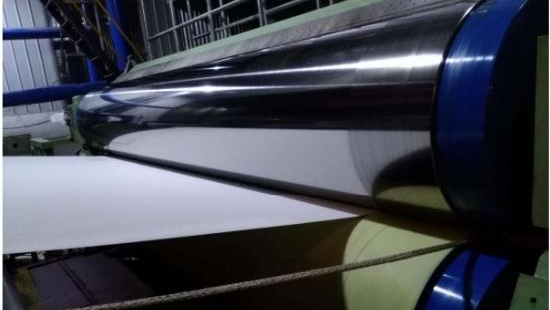
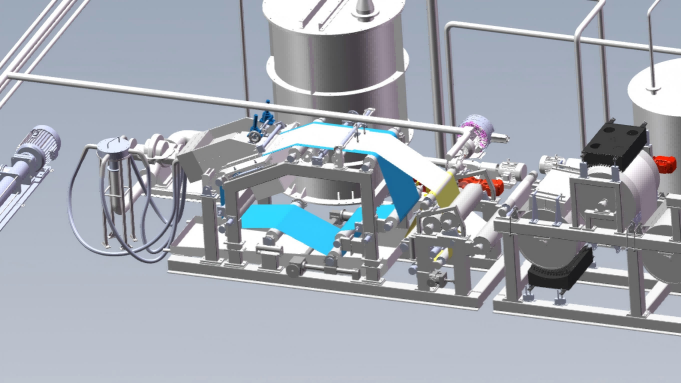
Crescent Former High-Speed Tissue Paper Machine/Toilet Paper Machine
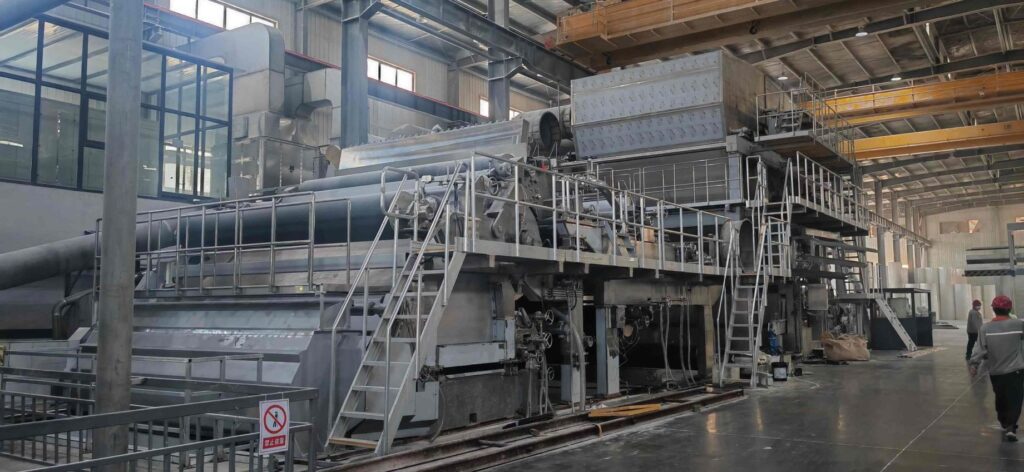
I. Machine Features:
High-Quality Formation
The forming section, comprising a forming roll and a high-performance headbox, ensures uniform and excellent sheet formation across a wide basis weight range while maintaining consistent set weight.
Forming Section: Rapid formation, no vacuum power required, no manual sheet threading needed. (CRESCENT FORMER HIGH-SPEED TISSUE PAPER MACHINE)
High-Performance Headbox:A specially shaped design disperses stock uniformly across the machine direction (MD) as it is injected into the wedge gap between the forming wire and felt. This effectively prevents issues like fiber retention.
II. Technical Specifications(Basic Data)
Paper Grade: Premium household tissue base paper
Raw Fiber Material: Wood pulp, bamboo pulp
Basis Weight: 11–15 g/m²
Trim Width: 3600 mm
Design Speed: 1200 m/min
Operating Speed: 1000 m/min
Crepe Ratio: 20%
Production Capacity: ~60 t/d
Layout: Single-floor arrangement
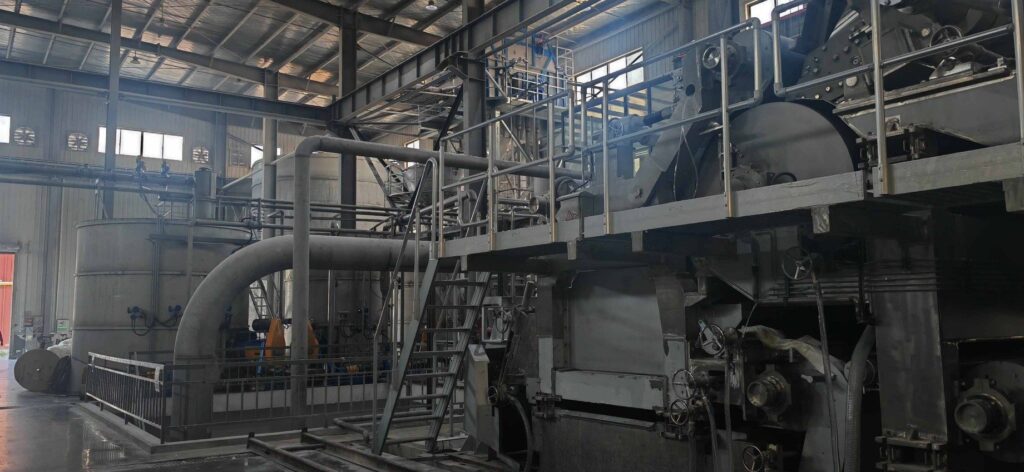
III. Structural Configuration
① Headbox
Crescent hydraulic headbox, composed of: frame and adjustment system, tapered tube distributor, perforated plate, equilibrium chamber, turbulence generator, slice lip, fully adjustable top plate (front/rear, up/down), and worm-gear full-width adjustment.
② Crescent Former
Four-roll cantilever design. Rolls include: breast roll, couch roll, tension roll, and guide roll.
Frame: Welded steel box structure with stainless steel-clad beams and base.
Cantilever Design: For wire changes, the operator-side frame opens via hydraulic jack lift, allowing easy wire access.
Components: Automatic guide and valve (1 set), automatic tensioner (1 set), breast roll expansion device (1 set), doctor blades (4 sets), high/low-pressure shower pipes.
Wire Specifications: Max. elongation 1.5%, max. tension 10 kN/m. Tension is sensed and fed back to the PLC-controlled tensioner. Two limit switches prevent over-tension.
Water Management: Key design focus. Curved baffles in the save-all collect white water from the forming roll. Roll save-alls collect blade discharge. Splash guards are installed on both drive and operator sides (operator-side guards are removable).
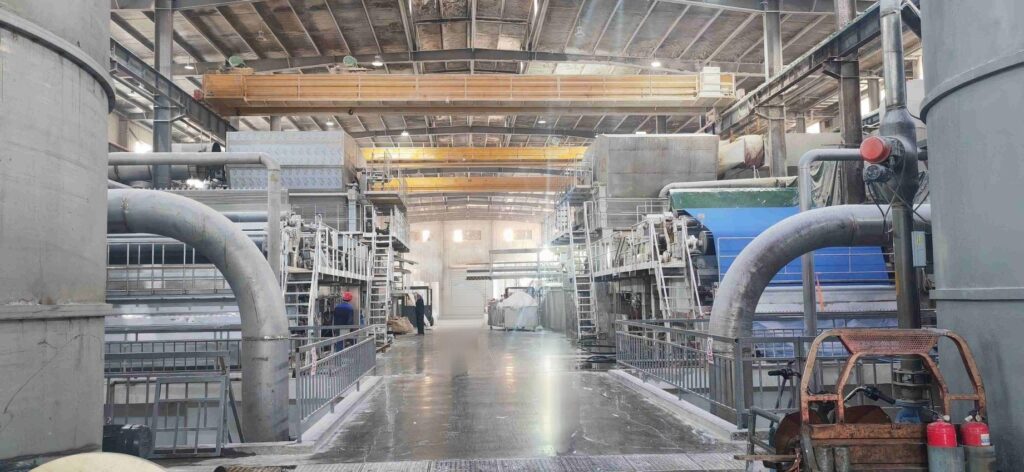
③ Felt Section
Frame:Welded steel box structure with stainless steel-clad beams and base.
Cantilever Design: Felt changes facilitated by hydraulic jack lift on the operator side.
Components: Forming roll (1), vacuum roll (1), felt rolls (6), felt vacuum boxes (2), automatic guide and valve (1 set), tensioner (1 set), doctor blades (3 sets), high/low-pressure shower pipes.
Solid Forming Roll: Unique to crescent tissue machines. Uses centrifugal dewatering (no vacuum), reducing power consumption. Roll body: Q345 steel; journals: tempered 45# steel with 1:12 tapered bearings; hard rubber cover (P&J 0° hardness).
Vacuum Roll: High-speed tissue-specific rubber cover (P&J 24° hardness), blind-drilled pattern (>30% open area). Single-vacuum chamber (316 stainless steel, 140° arc). Imported graphite seals.
Nip Pressure: 100 kN/m. Hydraulic loading system (imported cylinders, power unit, interlocked with drive) ensures stability and precision at high speed.
Felt Vacuum Boxes: 304 stainless steel body (6 mm thick, stress-relieved). Zirconia ceramic panels (3-year lifespan).
④ Yankee Dryer
Diameter: φ3660-4877 mm
Design Pressure: 0.8 MPa
Construction: Complies with Chinese industry standards and ASME code. Alloy cast iron body (HT350), cast iron end caps (HT350), spheriodal graphite iron journals (QT400).
Internal Features: Patented turbulator rod and siphon system (Fig. 1) enhances heat transfer, reduces steam consumption, and improves condensate removal.
Insulation: Patented radiation-shielding end cap insulation plates further save steam.
Attachments: Insulation sleeves and rotary joints on both journals.

Fig. 1: Axonometric View of Turbulator Rod and Siphon System
Through Air Dryer/ TAD
TAD technology is primarily applicable to two major categories of products:
one is products with strict requirements for breathability, such as automotive filter paper, high-permeability paper, and tea bag paper;
the other is household paper, which particularly pursues high bulkiness.
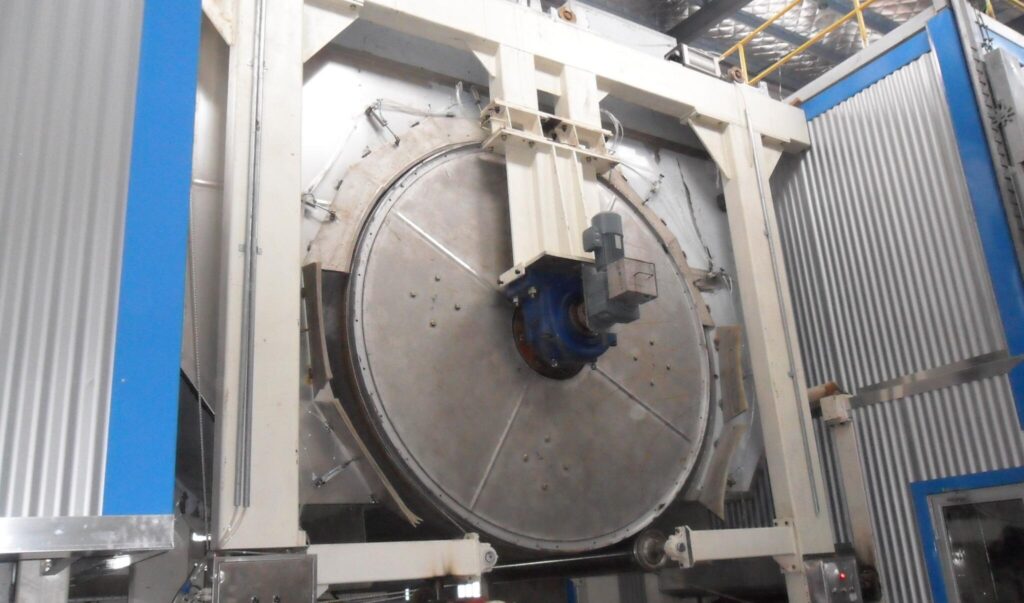
Household paper products occupy a place in the market due to their high bulkiness, softness, good water absorption, and cost advantage.
Meanwhile, high-breathability paper also meets the needs of specific fields with its excellent breathability, dry and wet strength, and unique hybrid fiber system.
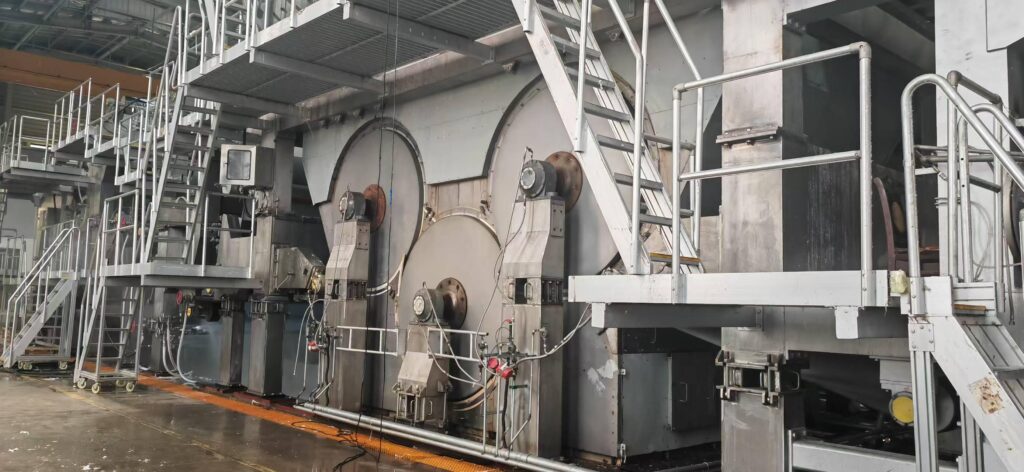
⑤ Yankee Hood
Steam-heated high-speed air hood, fully stainless steel. Split into dry and wet halves for access.
Design: Perforated jet nozzles direct hot air 15 mm from dryer surface. Moist air exits via exhaust ducts.
Components: Air distribution ducts, frame, insulation, high-temp flexible connections.
Air System: Steam-heated dual circulation with 2 circulation fans, 1 exhaust fan, 2 steam heater banks, filters, ducting, valves, and instrumentation.
⑥ Crepe Doctor Assembly
Includes: broke doctor, creping doctor, and cleaning doctor.
Construction: 304 stainless steel holder, imported hydraulic loading tube, SK-5 steel blades (1.25 mm × 130 mm).
Adjustability: Fixed-groove blade mounting; doctor height adjustable; creping angle adjustable within 10° for product flexibility.
Accessories: Pneumatic loading, oscillation, control systems, mobile blade cart, and storage.
⑦ Reel
Designed for high-speed tissue, featuring:
Components: Curved roll, reel drum, reel spool, automatic spool storage, spool starter, primary/secondary arms, 2-stage braking buffer, reel change device, vacuum sheet threading.
Instrumentation: Sheet break detection, roll length/weight/diameter measurement (data to DCS for production management).
⑧ Lubrication System
Circulating oil system: central lubrication unit, pressure supply/return lines.
Return Flow: Collected at operator/drive side headers back to the unit. Supply pressure: 4 kg/cm².
Control: Temperature, level, flow monitoring (signals to DCS for interlock). Major components imported.
⑨ Hydraulic, Pneumatic & Machine Control System (MCS)
All consoles and field cabinets: stainless steel, major components imported.
Automation: PLC control (signals to DCS). Advanced features: automatic wire/felt tension control, reel automation, auto threading, bearing temperature monitoring—enhancing safety, stability, and ease of operation.
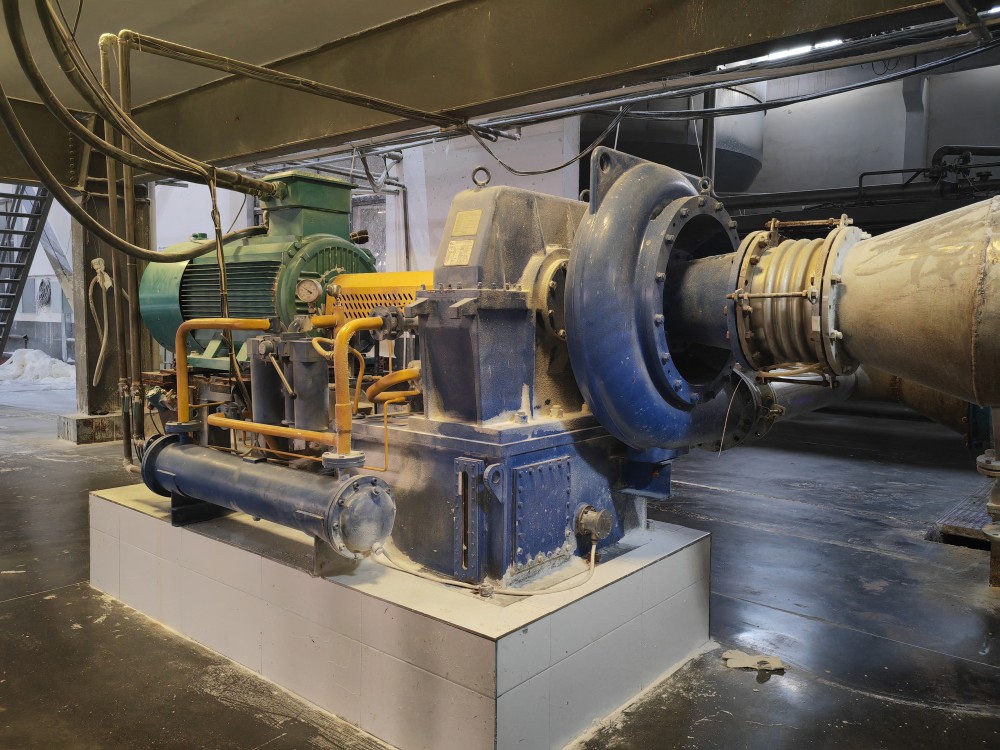
⑩ Drive Control System
Drive Type: AC variable frequency drive (VFD) with vector control.
Control Architecture: Three-level, fully digital networked PLC.
Feedback: Optical encoder digital closed-loop.
Power Supply: Common DC bus.
Components:
VFD: ABB ACS800 series (heavy-duty)
PLC: Siemens S7-300
HMI: Siemens MP277-10 Touch Panel
Network: Profibus-DP, integrated with mill DCS for centralized monitoring.
IV. Energy-Saving Design
Power Consumption: ≤280 kWh/t (45–75% reduction vs. conventional machines)
Steam Consumption: ≤2.3 t/t (50–60% reduction)
Fresh Water Usage: ≤3 t/t (50–60% reduction)
Dispersants: Minimized or eliminated (based on paper requirements).
Felt Life: 60–90 days. Simplified wire/felt change design reduces downtime, boosting efficiency.
V. Equipment Technical Parameters
| Model | Product Variety | Grammage | Suitable Raw Material | Work Speed | Daily Capacity (t) |
| BN-1880 | 13-25gsm | Hardwood/softwood pulp, waste pulp | 450-1800 m/min | 11-17 | |
| BN-2100 | Tissue base paper, napkin base paper | 13-25gsm | Waste pulp, bamboo/bagasse pulp, deinked | 450-1800 m/min | 12-20 |
| BN-2400 | Wrinkles tissue base paper | 13-25gsm | Virgin pulp (hardwood/softwood) | 450-1800 m/min | 14-24 |
| BN-2850 | Tissue base paper, napkin base paper | 13-25gsm | Pulp, shavings | 450-1800 m/min | 23-33 |
| BN-3500 | 13-25gsm | Bamboo pulp, wheat straw pulp, deinked | 450-1800 m/min | 28-41 | |
| BN-4100 | 13-25gsm | Pulp, etc. | 450-1800 m/min | 33-46 |
VI. Advantages
The 3600/1200 Crescent Tissue Machine embodies modern principles: wide width, high speed, safety, stability, energy efficiency, productivity, premium quality, and automation. It meets market demand for domestically produced high-speed tissue machines and empowers users to:
- Produce premium tissue paper
- Create value and upgrade operations
- Build brands and expand market reach
The toilet paper converting line is a key link in the toilet paper manufacturing process, mainly responsible for converting the semi-finished large shaft paper produced in the papermaking process into the final product that meets market sales standards.
Its core function includes fine processing of semi-finished products to enhance their practicality and commercial value. The main functions of the toilet paper post-processing production line include rewinding, slitting, embossing, punching, gluing, and packaging processes.
The rewinding machine rewinds the large axis paper into small rolls for subsequent processing;
The slitting unit is cut into different widths or lengths according to the requirements;
Embossing and punching enhance the softness, water absorption, or ease of use of the paper; Spray glue is used to fix the structure of the roll paper;
The packaging equipment completes sealing and packaging to ensure product hygiene and shelf display.