
What Are the Causes of Size Press Roll Surface Wear?
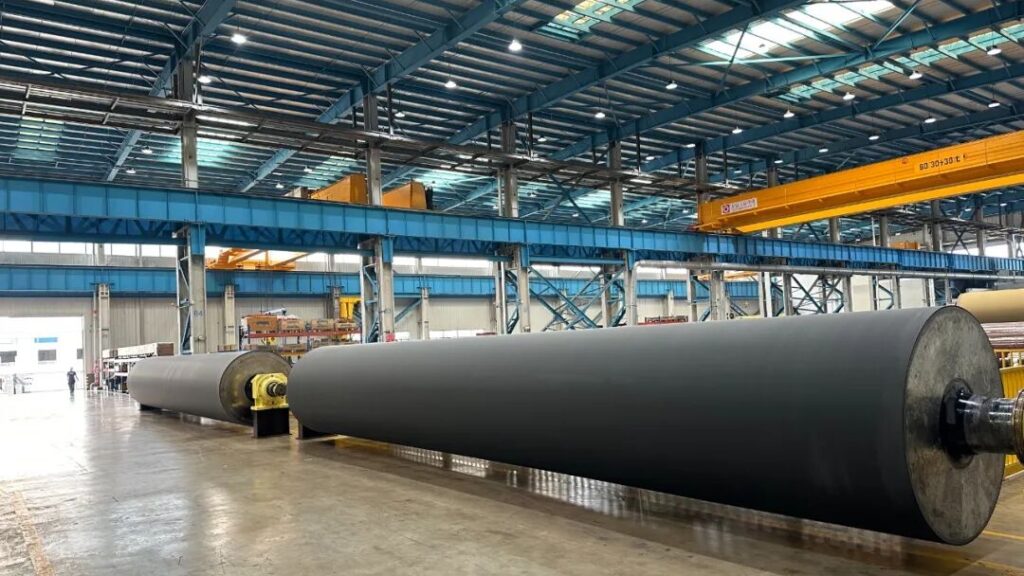
The size press roll is a key piece of equipment in the paper sizing (surface sizing) process.
Wear on its roll surface directly affects sizing uniformity, sheet quality, and roll life.
The causes of wear are multifaceted and require comprehensive prevention. Below are some causes and corresponding avoidance measures.
I. Main Causes of Size Press Roll Surface Wear
- Mechanical Wear:
Excessive Nip Pressure:The pressure in the nip between the size press roll and the backing roll is too high, exceeding the load-bearing limit of the roll surface material, leading to material fatigue, peeling, or crushing.
Speed Differential / Sliding Friction:A speed difference (slippage) between the size press roll and the backing roll or the paper web creates intense sliding friction, directly scraping and abrading the roll surface material.
Related issues
Misalignment / Eccentricity:Improper roll installation, bearing wear, or foundation settlement causing non-parallel roll axes or an out-of-round (eccentric) roll results in uneven pressure distribution in the nip, subjecting localized areas to abnormal high pressure and friction.
Impact / Scratching by Hard Objects:Foreign objects like sand particles or hard lumps in the paper web impact or scratch the roll surface as they pass through the nip. Paper edges during a web break can also cause impact or cutting damage.
- Chemical Corrosion / Swelling:
Chemical Attack by Sizing Agents:Sizing agents (e.g., AKD, SAE, starch, etc.) and their additives (e.g., aluminum sulfate) may cause chemical corrosion, swelling,
or degradation of the roll surface material (especially certain rubbers or polymers), reducing its mechanical strength and wear resistance.
Related issues
Cleaning Agent Effects:Strong acids, alkalis, or solvent-based cleaning agents used during shutdown cleaning, if excessively concentrated,
left in contact too long, or incompatible with the roll surface material, can accelerate material aging and deterioration.
- Abrasive Wear:
Filler / Coating Particles:Fillers (e.g., calcium carbonate, kaolin, talc) and fine fibers carried in the size solution or on the sheet surface act as abrasives, constantly grinding the roll surface under high nip pressure.
Hard fillers (e.g., titanium dioxide, ground calcium carbonate) are particularly harmful.
Related issues
Scale / Deposits:Sizing agents, starch degradation products, microorganisms, etc., easily form hard scale on the roll surface.
These deposits are abrasive themselves, alter roll surface characteristics, affect operation, and can also damage the surface during cleaning.
- Thermal / Fatigue Aging:
Process Temperature:High-temperature sizing processes accelerate thermal aging and oxidation of the roll surface material, reducing its elasticity and wear resistance.
Dynamic Fatigue: Under high-speed operation and cyclic pressure, the roll surface material undergoes repeated compression-rebound stress, leading to material fatigue, cracking, and peeling (common especially in rubber-covered rolls).
- Improper Operation and Maintenance:
Insufficient Lubrication/Cooling:Poor lubrication in the nip or bearings causes abnormal frictional heating;
insufficient roll surface cooling leads to temperature rise accelerating wear.
Inadequate Cleaning:Failure to thoroughly clean the roll surface during shutdowns allows residues to harden into abrasives or cause corrosion.
Bearing/Drive Issues:Damaged bearings, excessive vibration, or unstable drive cause irregular roll running, exacerbating wear.
II. Measures to Avoid Size Press Roll Surface Wear
- Optimize Process Parameters and Operation:
Precisely Control Nip Pressure:Use the minimum, stable nip pressure required to ensure sizing effect and sheet quality. Avoid unnecessary over-pressing.
Ensure Speed Synchronization:** Precisely control the speeds of the size press roll, backing roll, and paper web to minimize speed differential and slippage.
Control Process Temperature:** Reduce size solution temperature as much as possible while meeting sizing requirements to lessen thermal aging effects.
- Select and Maintain Suitable Roll Surface Material:
Choose High-Performance Materials:Select roll cover materials with excellent wear resistance, chemical corrosion resistance, heat resistance, and fatigue resistance based on sizing agent type, temperature, filler characteristics, etc.
Ensure Roll Surface Quality:For new rolls or after re-covering, ensure uniform roll surface hardness, absence of defects, and precise dimensions (roundness, cylindricity, crown).
Related issues
Regular Inspection and Repair:Regularly inspect roll surface condition (wear, scratches, cracking, swelling, scale). Perform on-site spot repairs for minor damage promptly;
schedule offline re-covering or grinding for extensive or severe wear.
- Prevent Foreign Objects and Scale:
Enhance Stock Purification:Ensure the stock preparation and approach flow systems effectively remove hard impurities like metal and grit.
Optimize Size Solution Filtration:Effectively filter the size solution to remove large particles and gel lumps.
Effective Cleaning:Thoroughly clean rolls, pans, and piping during shutdowns to prevent residue buildup and scaling from sizing agents/starch.
Control Microorganisms:Where permitted, add appropriate biocides to prevent microbial growth and slime formation.
- Ensure Equipment Precision and Maintenance:**
Precise Installation and Alignment:Ensure the size press roll and backing roll are precisely parallel and concentric. Regularly check bearing housings and foundation condition.
Maintain Bearings and Drive:Regularly inspect, lubricate, and replace bearings to ensure smooth drive system operation and minimize vibration.
Check Roll Cooling/Lubrication:Ensure cooling/lubrication systems function properly to prevent excessive roll surface temperature.
Precautions
Avoiding size press roll surface wear is a systematic project requiring attention to material selection, process control, equipment maintenance, and operational standards.
The key lies in:
- Suitability:Selecting high-performance roll surface materials and doctor blades best matched to the operating conditions (chemicals, temperature, fillers, pressure).
- Precision:Precisely controlling pressure, speed, and alignment to avoid overload and abnormal friction.
- Cleanliness: Preventing foreign object ingress and thoroughly removing scale.
- Maintenance:Strictly implementing regular inspection, lubrication, doctor blade replacement, and roll surface condition assessment/repair schedules.
Summarize
By comprehensively applying the above measures, the service life of size press rolls can be significantly extended, ensuring stable sizing quality and reducing maintenance costs and production losses.