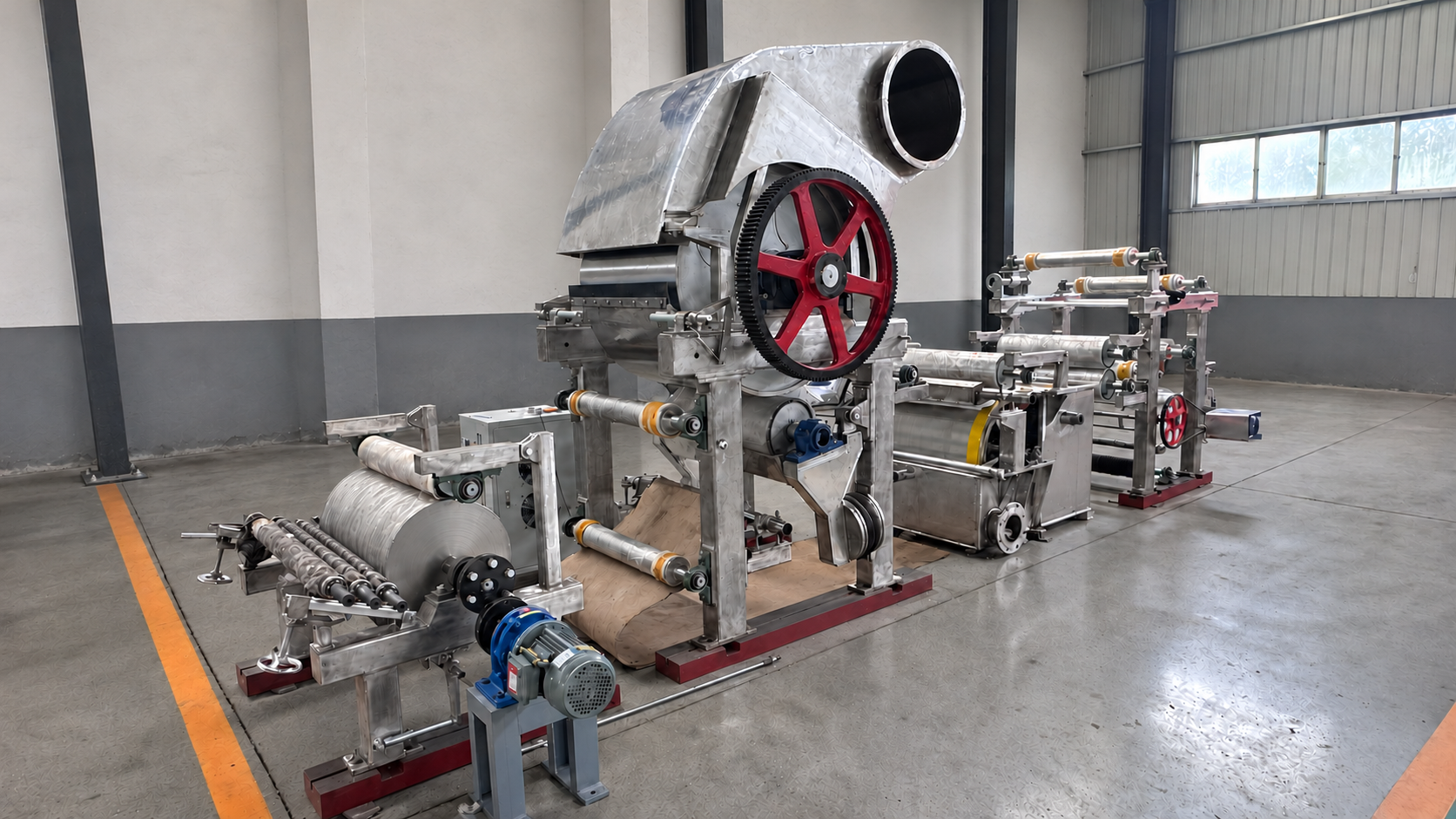
Forming, pressing and drying configured for your target sheet.
BANNOR supplies complete inclined wire paper machines for specialty paper and wet-laid nonwoven projects. Forming, pressing and drying are configured to suit the furnish, target basis weight, trimmed web width and operating speed.
The forming section brings together stock distribution, fiber dispersion and controlled dewatering. These are key considerations when working with long fibers, demanding sheet formation requirements or a layered product structure.
Discuss your furnish and production targets with BANNOR.
Request a Machine Configuration
Applications and Product Requirements
The intended paper or nonwoven grade is the starting point for machine selection. Define the finished-sheet requirements alongside the raw materials so that the forming and downstream sections can be considered together.
| Application | Main selection considerations | Information to share |
|---|---|---|
| Filter paper | Sheet uniformity, basis weight consistency, permeability, pore structure and strength targets | Fiber composition and length, target sheet properties, relevant test methods and downstream treatment |
| Aramid paper | Furnish dispersion, sheet uniformity, strength requirements and subsequent processing | Furnish composition, basis weight, finished-sheet targets and downstream processing requirements |
| Wet-laid nonwovens | Fiber blend, web structure and compatibility with the selected bonding and drying route | Fiber types and lengths, basis weight, bonding requirements and the intended finished product |
For each application, the usable furnish and operating conditions are evaluated as part of the machine specification.
Forming Around Your Furnish and Sheet Design
The headbox distributes a dilute fiber suspension onto an inclined forming fabric. As water drains through the fabric, the fibers form a wet web that passes to the next section. The furnish and required sheet structure guide the forming and drainage settings.
Stock distribution and fiber dispersion
Long-fiber furnishes can present flocculation and sheet-uniformity challenges. Headbox distribution, furnish preparation and flow conditions need to be considered together to manage fiber dispersion across the forming width.
The headbox and inclined-wire arrangement are therefore selected around the actual furnish and forming requirements.
Dewatering matched to the wet web
The drainage arrangement needs to suit the furnish, target basis weight and operating speed. It must also support wet-web transfer into the next section.
The process assessment considers both water removal and the sheet structure required for subsequent pressing, drying or other agreed processing.
Single-layer and multilayer forming
A single-layer arrangement can be considered where the product is formed from one furnish system. A multilayer arrangement can be discussed when the sheet design calls for layers with different compositions or functions.
Layer composition, stock distribution, drainage and interlayer bonding need to be considered together. The forming structure is defined against the intended product and its acceptance requirements.
Complete Machine Configuration
BANNOR’s supply is organized as a complete paper-machine project. The equipment list, section boundaries and interfaces are agreed for the selected paper grade.
| Section or interface | What is defined for the project |
|---|---|
| Stock supply and approach flow | Required furnish condition, stock flow and dilution arrangements, together with upstream supply boundaries and connection points |
| Inclined-wire forming section | Headbox, forming structure, forming-fabric arrangement and dewatering layout |
| Wet-web transfer and pressing | Transfer method and pressing arrangement appropriate to the wet web and finished-sheet requirements |
| Drying section | Drying route, heat source, evaporation duty and target final moisture |
| Reeling and sheet handling | Required delivery form, winding or reeling arrangements and downstream interfaces |
| Drives, controls and utilities | Section speed coordination, control interfaces, power supply, water, vacuum and other project utility requirements |
The quotation should also identify documentation, installation, commissioning and training responsibilities, together with the equipment included in the agreed supply.
Specification Inputs for Your Inclined Wire Paper Machine
Use the following information to define a machine configuration and request a technical quotation.
| Specification item | Information required |
|---|---|
| Finished product | Paper or nonwoven grade, intended use and required sheet properties |
| Furnish | Fiber types, fiber lengths, blend proportions and relevant furnish characteristics |
| Basis weight | Minimum, normal and maximum target basis weight, in g/m² |
| Trimmed web width | Required finished web width, in mm. Forming-fabric width is defined separately |
| Operating speed | Target working speed, in m/min. State any design-speed requirement separately |
| Production target | Required output, operating hours and planned product mix |
| Forming structure | Single-layer or multilayer requirements and the purpose of each layer |
| Downstream processing | Pressing, bonding, drying, finishing and delivery requirements |
| Site conditions | Available space, power supply, heat source, water and relevant utility conditions |
Performance and utility requirements are specified for the agreed furnish, paper grade and equipment configuration.
Frequently Asked Questions
What is the difference between an inclined wire former and a complete paper machine?
The inclined wire former is the forming section, where the fiber suspension is distributed and dewatered into a wet web. A complete inclined wire paper machine combines this section with the pressing, drying and other equipment agreed for the project. For a BANNOR project, the quotation defines how the forming section connects with the agreed downstream equipment.
How is the machine selected for long-fiber materials?
Selection starts with fiber type, length, blend and the intended sheet properties. These inputs influence furnish preparation, headbox distribution, drainage and wet-web handling. Share the actual furnish information and product targets when requesting a configuration.
When should multilayer forming be considered?
Multilayer forming is relevant when the product design requires layers with different furnish compositions or functions. The specification needs to address the role of each layer, its stock supply and the interaction between layers during forming and subsequent processing.
What determines the price of an inclined wire paper machine?
Price depends on the paper grade, width, production target, forming structure, pressing and drying arrangements, controls and scope of supply. Site interfaces and agreed installation or commissioning responsibilities also affect the quotation. A defined product specification makes supplier proposals easier to compare.
Can pressing and drying be configured for different sheet requirements?
Yes. These sections are configured as part of the machine project. Their selection considers wet-web handling, water removal and the required final-sheet properties, including bulk, pore structure and strength where relevant. The drying route and utility conditions are confirmed in the project specification.
Does a filter paper machine also make finished filter bags?
The paper machine forms a paper web from a fiber suspension. Cutting, folding, sealing or assembling that paper into finished filter bags involves subsequent converting equipment. Specify both the required base paper and the intended downstream product when discussing a filtration project.
Discuss Your Machine Configuration
Send BANNOR your intended product and the following information:
- Fiber types, lengths and blend proportions
- Target basis weight and trimmed web width
- Required operating speed or production output
- Single-layer or multilayer sheet requirements
- Key sheet properties and relevant test methods
- Downstream processing and finished-web delivery requirements
- Available site utilities and any layout constraints
A product sample or an existing product specification can help make the discussion more precise.
Request a Technical Quotation